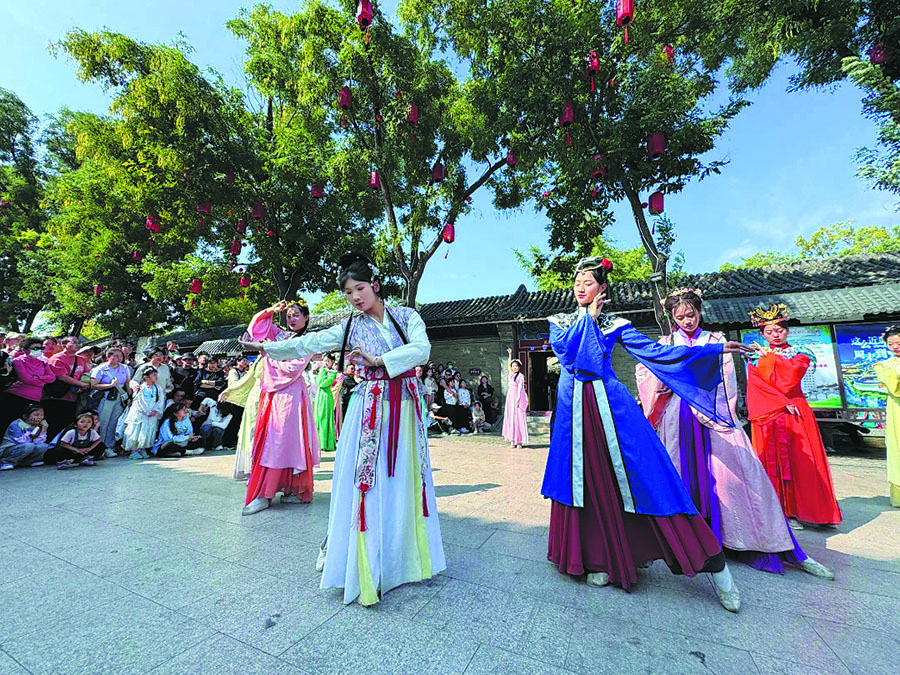
Rong Mansion
Introduction
Rong Mansion, also known as Rongguo Fu, is a distinguished architectural complex located in Zhengding county, Shijiazhuang, Hebei province, China. Built in the 1980s, it is designed in the traditional style of the Ming and Qing dynasties (1368-1911) and inspired by the classical Chinese novel "A Dream of Red Mansions" by Qing-era writer Cao Xueqin. This mansion serves as a cultural and historical representation of the novel's intricate descriptions of aristocratic life during the Qing Dynasty, making it a significant tourist attraction in Zhengding. The mansion is part of the county's rich tapestry of ancient architecture and cultural heritage, which draws visitors from across China and abroad.
Historical Background
Rong Mansion's design and construction are deeply rooted in the cultural legacy of "A Dream of Red Mansions," one of China's Four Great Classical Novels. The novel, written during the Qing Dynasty, portrays the life and decline of an aristocratic family, with detailed descriptions of their grand residences, customs, and social dynamics. The mansion was constructed in the 1980s to bring the fictional Rongguo Fu to life, allowing visitors to experience the grandeur and elegance described in the novel.
Zhengding County itself has a long and illustrious history, being designated a national historical and cultural city by the State Council in 1994. The county is renowned for its ancient structures, many of which have survived wars and natural disasters. It is home to dozens of historical sites, including national-level key cultural heritage protection units, provincial-level cultural protection units, and thousands of artifacts housed in local museums. The preservation of these sites, including Rong Mansion, reflects the county's commitment to safeguarding its cultural heritage.
Architectural Design
Rong Mansion is a remarkable example of traditional Chinese architecture, meticulously designed to emulate the style of the Ming and Qing dynasties. The complex features courtyards, halls, pavilions, and gardens, all arranged in a manner that reflects the hierarchical and aesthetic principles of ancient Chinese residential architecture. The use of red brick walls, intricate wood carvings, and tiled roofs adds to the mansion's authenticity and visual appeal.
The layout of Rong Mansion is inspired by the descriptions in "A Dream of Red Mansions," with spaces designed to evoke the grandeur and sophistication of the aristocratic lifestyle depicted in the novel. Visitors can explore the mansion's various sections, each showcasing unique architectural elements and offering insights into the cultural and social practices of the Qing Dynasty. The attention to detail in the mansion's design makes it a masterpiece of historical reconstruction and a valuable educational resource for understanding traditional Chinese architecture.
Cultural Significance
Rong Mansion holds immense cultural significance as a physical representation of "A Dream of Red Mansions", one of the most celebrated works of Chinese literature. By bringing the novel's setting to life, the mansion allows visitors to immerse themselves in the world of the Qing Dynasty aristocracy, gaining a deeper appreciation for the novel's themes and historical context.
In addition to its literary connections, Rong Mansion contributes to Zhengding County's reputation as a hub of cultural heritage and tourism. The mansion is a popular destination for visitors seeking to explore the county's ancient architecture and experience its rich history. It also serves as a venue for cultural events and activities, further enhancing its role as a center of cultural preservation and education.
The preservation and promotion of Rong Mansion reflect the broader efforts to protect Zhengding's historical sites and artifacts, ensuring that future generations can continue to learn from and appreciate the county's cultural legacy. As part of Zhengding's vibrant tourism scene, Rong Mansion plays a key role in showcasing the beauty and depth of China's architectural and literary traditions.








